SMMPanelKing Blog – Social Media Marketing Tips, Guides & Insights
Welcome to the SMMPanelKing Blog, your resource for practical Social media marketing tips, SMM panel guides, platform strategies, and the latest insights to help you grow your online presence. Whether you are an influencer, content creator, business owner, freelancer, marketing agency, or social media reseller, our blog provides useful information to help you make smarter digital marketing decisions.
At smm panel king, we provide a wide range of social media marketing services designed to support growth across popular platforms. Our services include Instagram followers, Instagram likes, Instagram views, Facebook followers, Facebook page likes, Facebook post likes, Facebook views, TikTok followers, TikTok likes, TikTok views, YouTube subscribers, YouTube views, and other social media engagement services.
Our blog covers important topics related to SMM panels, social media growth, digital marketing, Instagram marketing, Facebook marketing, TikTok marketing, YouTube promotion, reseller SMM panels, wholesale SMM services, and social media strategies.
You can discover detailed guides about how SMM panels work, how to select a reliable SMM panel, how to manage social media campaigns, how resellers can build their businesses, and how businesses can improve their online visibility. We also publish country-focused content covering markets such as India, Bangladesh, Pakistan, Indonesia, Vietnam, the Philippines, Nigeria, Thailand, and other regions.
Our goal is to make social media marketing easier to understand. Whether you are looking for affordable SMM services, learning about social media growth strategies, or exploring opportunities as an SMM reseller, our blog is designed to provide valuable and easy-to-follow information.
Explore the SMMPanelKing Blog today to discover new marketing ideas, useful guides, platform updates, and actionable strategies that can help you build a stronger social media presence.
Social Media Marketing Strategy
Social Media Marketing Strategy: A Simple Road Map
Social media can help a small business become known.
It can help a creator find new fans. It can also help a shop show its products to more people.
But posting without a plan can waste time.
One day you post a photo. The next day you post a video. Then you stop for a week.
This makes growth harder.
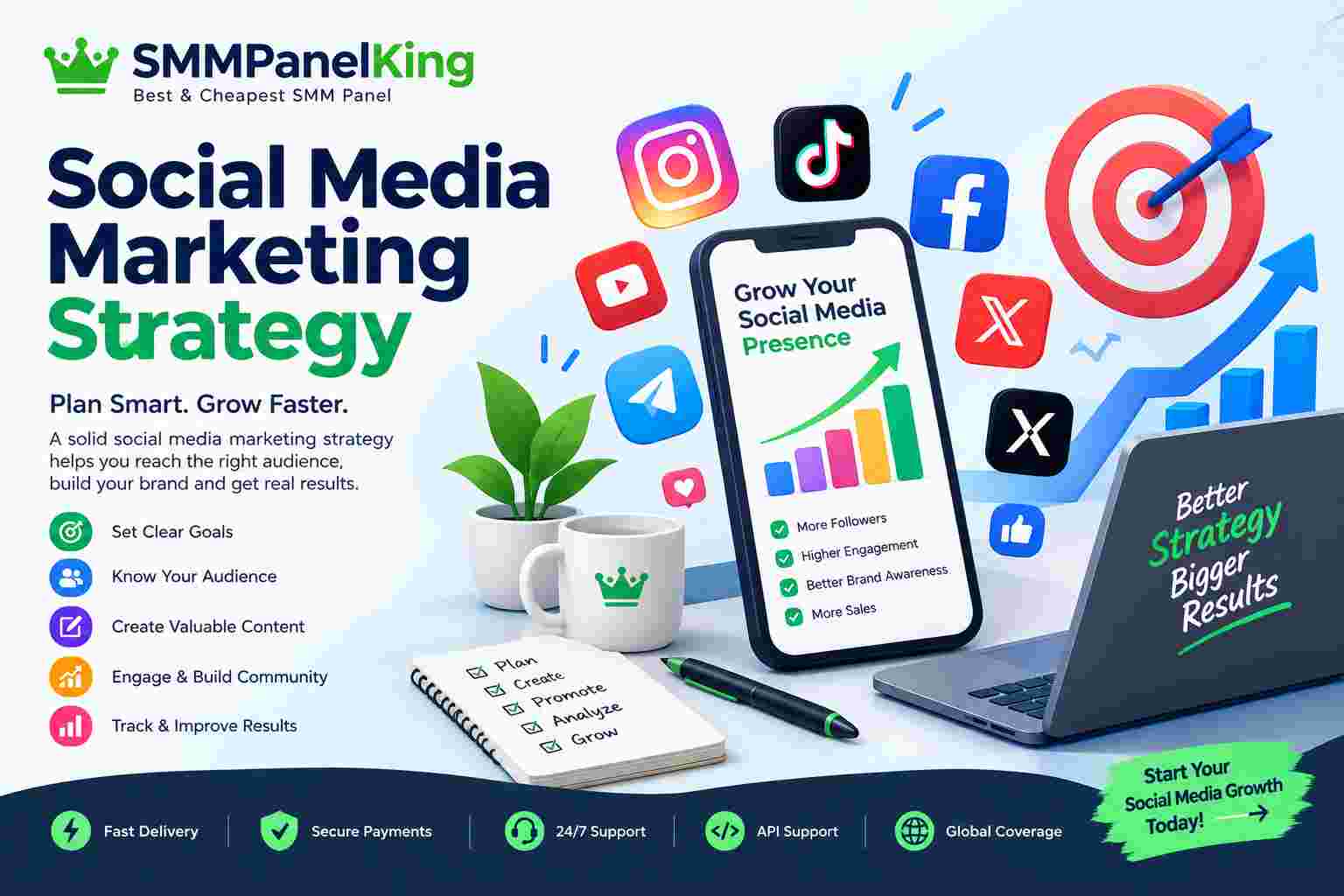
A good Social Media Marketing Strategy gives you a clear path.
It tells you who you want to reach. It tells you what to post. It also tells you where to post and how to check your results.
You do not need a hard plan.
A simple plan can work well.
In this guide, you will learn how to build a Social Media Strategy step by step. You will also learn about Social Media Growth, Social Media Engagement, Social Media Success, and simple ways to measure your work.
What Is a Social Media Marketing Strategy?
A Social Media Marketing Strategy is a plan for using social media to reach a goal.
The goal may be more followers.
It may be more website visits.
It may be more sales.
It may also be better brand awareness.
Your plan tells you what to do and why you are doing it.
Why a Strategy Matters
Without a plan, it is easy to post random content.
You may spend a lot of time but get little in return.
A strategy helps you use your time better.
A Simple Example
Imagine you own a small clothing shop.
You want more people to know your shop.
Your plan may be simple.
You post new clothes on Instagram. You share short videos on TikTok. You post offers on Facebook.
Then you check which posts bring more people to your shop.
That is a basic social media strategy.
Start With One Clear Goal
A good plan starts with a goal.
Do not try to fix everything at once.
Choose one main result first.
More Followers
You may want more people to follow your page.
This can help you build a larger audience.
More Website Visits
You may want people to visit your website.
You can use social posts to send people to your site.
More Sales
A shop may want more orders.
In that case, product posts, videos, offers, and customer stories can be useful.
More Brand Awareness
You may simply want more people to know your name.
This can take time, but regular content can help.
Know Your Audience
You cannot make good content for everyone.
Think about the people you want to reach.
Ask Simple Questions
What age are they?
What do they like?
What problems do they have?
What type of content do they watch?
What social apps do they use?
You do not need a huge research project.
Start with simple answers.
Use One Main Audience
For example, a local shoe shop may focus on young buyers.
A business coach may focus on small business owners.
A cooking page may focus on people who like easy recipes.
A clear audience makes content easier to plan.
Pick the Right Social Platforms
You do not need to use every platform.
Start with the ones where your audience spends time.
Facebook can be useful for local shops, groups, community posts, and business updates.
Instagram can work well for photos, Reels, fashion, food, beauty, travel, and other visual content.
TikTok
TikTok is useful for short videos and quick ideas.
YouTube
YouTube can be useful for tutorials, reviews, lessons, and longer videos.
LinkedIn can be useful for business, work, and professional content.
Telegram
Telegram can help with channels, groups, and direct updates.
Choose platforms based on your audience.
Do not choose them only because they are popular.
Create a Simple Social Media Strategy
Now you can start building your plan.
Keep it easy.
Pick Your Main Topic
Choose a few topics related to your business or page.
A fitness page may talk about food, exercise, sleep, and healthy habits.
A shop may talk about products, tips, deals, and customer questions.
Pick Your Content Types
Choose a mix of content.
You can use photos.
You can use short videos.
You can use longer videos.
You can use stories, tips, polls, questions, and guides.
Set a Simple Schedule
Decide how often you want to post.
You may post three times a week.
You may post five times a week.
Pick a schedule you can follow.
A simple plan that you follow is better than a big plan that you quit.
Build a Content Calendar
A content calendar helps you know what to post.
You can make it for one week or one month.
Monday
Share a useful tip.
Tuesday
Show a product or service.
Wednesday
Post a short video.
Thursday
Ask a simple question.
Friday
Share a customer story or useful idea.
Weekend
Post something fun or light.
You can change this plan for your own business.
The main goal is to avoid posting without a plan.
Use One Main Idea Per Post
People do not like confusing posts.
Keep each post focused.
One Tip
Give one useful tip.
One Answer
Answer one common question.
One Product
Show one product and explain why it is useful.
One Story
Tell one short story.
This makes your message easier to read.
How to Increase Social Media Engagement
Many people ask How to Increase Social Media Engagement.
The answer starts with better content and better talks with your audience.
Social Media Engagement includes actions such as likes, comments, shares, replies, saves, and other ways people interact with your content.
Ask Easy Questions
Questions can invite people to reply.
For example:
“Which color do you like?”
“Which tip helped you most?”
“What should we post next?”
Simple questions are easier to answer.
Reply to Comments
Do not ignore people who take time to comment.
A short reply can keep the talk going.
Use Polls
Polls make it easy for people to choose an answer.
They can also help you learn what your audience wants.
Make Useful Posts
People are more likely to react when a post helps them.
Teach something.
Solve a small problem.
Share a useful idea.
Make Content People Want to Share
Shares can help your content travel further.
Think about what people may want to send to a friend.
Helpful Lists
Lists can be easy to share.
For example, “5 Easy Study Tips.”
Simple Guides
A short guide can help someone solve a problem.
Funny Content
Fun posts can also get shared.
But make sure the humor fits your audience.
Useful News
If you share news, keep it clear and check the facts first.
Use Short Videos
Short videos can be a strong part of a social media plan.
They are easy to watch on a phone.
Start Fast
Show the main idea early.
Do not spend too long on the opening.
Keep It Simple
Use one main idea.
Add Text
Short text on the video can help people understand the message.
End With a Clear Action
You can ask viewers to follow, comment, visit your site, or save the post when it fits.
Use Stories Every Week
Stories can keep your page active.
They can also help people feel closer to your brand.
Daily Updates
Show what is happening today.
New Products
Show something new.
Questions
Ask your audience something simple.
Behind the Scenes
Show how your team works.
These small posts can make a page feel more real.
Social Media Growth Takes Time
Social Media Growth does not happen in one day.
A new page may start very slowly.
This is normal.
Stay Consistent
Keep posting.
Keep learning.
Keep improving.
Learn What Works
Some topics will work better than others.
Use those results to guide your next posts.
Do Not Chase Every Trend
Not every trend fits every brand.
Use trends only when they match your topic.
Build Real Social Media Engagement
Good engagement comes from real people who care about your content.
Talk Like a Person
Do not make every post sound like an ad.
Write like you are talking to someone.
Be Helpful
Answer questions.
Give useful tips.
Be Fast When You Can
Reply to comments and messages when possible.
Thank Your Audience
A simple thank-you can make people feel welcome.
How to Grow on Social Media
People often ask How to Grow on Social Media.
There is no single trick.
Growth usually comes from many small actions.
Post Useful Content
Give people a reason to follow.
Stay Active
Keep a steady schedule.
Use Short Videos
Test Reels, Shorts, and other short videos.
Talk With People
Reply to comments and join useful conversations.
Work With Other Creators
A shared post or video can help both pages reach new people.
Share Across Platforms
You can often reuse an idea in a new format.
For example, one long video can become several short clips.
Build a Strong Profile
Your profile matters.
A person may see one post and then visit your profile.
Make it clear.
Use a Clear Photo
Use a logo or a photo that people can see easily.
Write a Simple Bio
Tell people what you do.
Add a Link
Send people to your website or store when useful.
Show Your Main Topic
Make it easy to understand what your page is about.
Make a Simple Brand Message
Your brand should sound the same across your social pages.
Use Similar Words
Keep your style simple.
Use Similar Images
Try to keep your look easy to recognize.
Use the Same Name
Use your business name where possible.
This makes it easier for people to find you.
Social Media Marketing for Small Businesses
Small businesses do not need a huge team.
A simple plan can work.
Show Your Products
Use clear photos and short videos.
Answer Customer Questions
Turn common questions into helpful posts.
Share Offers
Give people a clear reason to buy.
Show Real Work
Show your team, shop, products, or daily work.
This can help people know the business better.
Social Media Marketing for Creators
Creators need attention and trust.
Choose One Main Topic
Pick a clear subject.
Make Regular Content
Post often enough to stay active.
Show Your Style
Use your own voice.
Talk With Followers
Reply to comments.
Ask what people want next.
Social Media Marketing for Online Shops
Online shops can use social media to bring people to product pages.
Show Product Details
Tell people the size, color, price, and main features.
Make Product Videos
Show the product in use.
Share Customer Feedback
Use real feedback when you have permission.
Make Buying Easy
Tell people where to buy.
Social Media Marketing for Agencies
Agencies often have many clients.
This makes planning very important.
Create Client Plans
Each client should have a clear goal.
Keep Content Organized
Use a calendar.
Track Results
Check each client's key numbers.
Report Clearly
Use simple reports that clients can understand.
Social Media Marketing for Resellers
Resellers can use social media to find customers.
Show Your Services
Explain each service in simple words.
Share Helpful Tips
Teach customers about social media.
Build Trust
Use clear prices and clear service details.
Keep Customers Updated
Reply to questions and order messages.
Use Social Media Tools
Tools can save time.
You do not need many tools.
Planning Tools
A calendar can help you plan posts.
Design Tools
Simple design tools can help you create images and videos.
Analytics Tools
These tools can help you see how your posts are doing.
Scheduling Tools
Scheduling can help you plan posts ahead of time.
Choose tools that make your work easier.
How to Measure Social Media Success
A strong plan needs numbers.
This brings us to an important question: How to Measure Social Media Success?
Start with the goal you chose.
If Your Goal Is Followers
Track follower growth.
Do not look only at the final number.
See how the number changes over time.
If Your Goal Is Engagement
Track likes, comments, shares, saves, replies, and other actions.
Look for changes over time.
If Your Goal Is Website Visits
Track clicks from social media.
See which platforms send the most people.
If Your Goal Is Sales
Track leads, orders, or sales that came from social media.
This can show whether your marketing is helping the business.
Look at More Than One Number
One number does not tell the full story.
A post may get many views but very few clicks.
Another post may get fewer views but more sales.
This is why you need to look at the right numbers for your goal.
Reach
Reach tells you how many people saw the content.
Views
Views can show how often content was watched.
Engagement
Engagement shows how people reacted to the content.
Clicks
Clicks show whether people took the next step.
Sales
Sales show the business result.
Use the number that matches your goal.
How to Measure Social Media Growth
Social Media Growth should be checked over time.
Do not judge your page from one day.
Compare Weeks
Compare this week with last week.
Compare Months
Monthly checks can show bigger changes.
Compare Content Types
Look at photos, videos, Reels, Stories, and other content.
See which type works best.
Social Media Success Is More Than Followers
Many people think a large follower count means Social Media Success.
That is not always true.
A page can have many followers and very little activity.
Another page can have fewer followers but strong customer interest.
Look at Real Actions
Are people commenting?
Are they visiting your website?
Are they asking about your products?
Are they buying?
These actions can tell you more.
Set Simple Targets
Targets make your plan easier to follow.
Follower Target
You may set a monthly follower goal.
Engagement Target
You may want more comments or shares.
Traffic Target
You may want more website visits.
Sales Target
You may want more orders from social media.
Keep your targets realistic.
Test Different Content
Do not assume you know what will work.
Try different ideas.
Test Different Topics
Try two or three topics.
See which gets better results.
Test Different Video Lengths
Try short videos and slightly longer videos.
See what people watch.
Test Different Titles
A small title change can affect attention.
Test Different Images
Try different photos or designs.
Keep the versions that work better.
Learn From Your Best Posts
Your best posts can teach you a lot.
Find the posts that did well.
Check the Topic
What was the post about?
Check the Format
Was it a photo, video, Reel, or Story?
Check the Message
What made the post useful?
Make More Like It
Create new posts around the same idea.
Do not copy the same post every time.
Use the lesson, not the exact post.
Learn From Weak Posts
Weak posts can also teach you.
Do not feel bad about them.
Ask Why
Was the topic wrong?
Was the post too long?
Was the image unclear?
Was the timing poor?
Change One Thing
Try changing one part at a time.
This makes testing easier.
Build a Weekly Review
Set aside a little time each week.
Look at your results.
What Worked?
Write down your best posts.
What Did Not Work?
Note the weak ones.
What Will You Try Next?
Choose one or two new ideas.
This keeps your plan moving.
Use Social Media Engagement to Learn
Engagement is not only about numbers.
Comments can tell you what people need.
Questions can show where people are confused.
Shares can show which ideas people value.
Use these clues.
They can help you make better content.
How to Increase Social Media Engagement With Better Questions
Questions work best when they are easy.
Give Two Choices
“Tea or coffee?”
Ask for One Opinion
“What do you think about this?”
Ask for a Simple Answer
“Which tip should we explain next?”
Easy questions can lead to more replies.
Create Content for Different Parts of the Buyer Journey
Not everyone is ready to buy.
Some people are just learning.
Beginner Content
Teach the basics.
Helpful Content
Solve a problem.
Product Content
Show what you sell.
Trust Content
Share real customer feedback.
Offer Content
Tell people about a deal.
This mix helps your page feel useful.
Use Customer Questions as Content Ideas
Your customers can tell you what to post.
Look at the questions they ask.
Turn those questions into posts.
For example, a shoe shop may get asked, “Which size should I buy?”
That can become a short guide.
A software company may get asked, “How does this tool work?”
That can become a simple video.
Use Reviews and Real Stories
People often want to know what others think.
Real reviews can help.
Share Customer Feedback
Use real words from real customers.
Show Real Results
Show real examples when you have permission.
Tell Customer Stories
Explain the problem and how your product helped.
Keep your claims honest.
Country-Targeted Payment Methods for Social Media Services
Payment can be an important part of a social media business.
The best payment option depends on the country and the service provider.
Always check which methods the provider currently accepts.
Bangladesh
For Bangladesh, users may look for bKash and Nagad.
bKash says it supports online and QR payments and provides payment services across Bangladesh.
Nagad provides digital financial services through its official platform and app.
When buying a social media service, use the payment details shown on the provider's official website.
India
For India, users may look for UPI.
NPCI lists UPI as a major payment system and continues to publish current UPI updates and rules.
When a social media service supports UPI, check the exact payment steps before sending money.
Pakistan
Users in Pakistan may look for JazzCash or Easypaisa.
JazzCash supports online payments and payment gateway use.
Easypaisa also provides online payment tools for businesses and users.
Check the payment choice offered by your service provider.
Indonesia
For Indonesia, users may look for DANA or QRIS.
DANA supports payments through its balance, bank cards, bank transfers, and QRIS.
Check whether the social media service accepts DANA or a QRIS payment.
Philippines
For the Philippines, users may look for GCash.
GCash explains that users can pay online from supported merchant pages using the GCash app.
Check the provider's current payment page before paying.
How to Keep Online Payments Safe
Good marketing also needs good payment habits.
Use the Correct Website
Check the website address before paying.
Check the Amount
Make sure the amount is correct.
Check the Receiver
Make sure the payment goes to the account shown by the service provider.
Save Your Receipt
Keep a payment record.
Keep Your PIN Private
Never share payment PINs or secret codes.
Use a Social Media Strategy for Each Country
A global business may need different plans for different places.
People in different countries may use different platforms and payment methods.
Local Content
Use examples that make sense to local users.
Local Language
Use the language your audience understands best.
Local Offers
Make offers that fit local buyers.
Local Payment
Offer payment methods that local users know when your business supports them.
This can make buying easier.
Local Social Media Growth
Local content can be very useful for small businesses.
Show Local Places
A local restaurant can show nearby places.
Use Local Events
Share news about events that matter to the local audience.
Use Local Stories
Tell stories about your business and community.
This can help people feel closer to the brand.
Build a Simple Social Media Strategy for a New Business
A new business can start small.
Week One
Set up your profiles.
Add your photo, bio, website, and contact details.
Week Two
Start posting useful content.
Week Three
Test short videos.
Week Four
Check the results.
Then improve the next month.
This is easier than trying to do everything at once.
Social Media Marketing Strategy for an Online Store
An online store needs content that helps people buy.
Product Posts
Show products clearly.
Product Videos
Show how the product looks and works.
Customer Questions
Answer common buying questions.
Deals
Share useful offers.
Trust Posts
Show real feedback and real business information.
Social Media Marketing Strategy for a Creator
Creators need content that people want to watch.
Pick a Clear Topic
Choose what you want to be known for.
Create a Schedule
Post on set days when possible.
Make Short Videos
Short videos can help bring new viewers.
Build a Community
Talk with followers.
Study the Results
See which topics work best.
Social Media Marketing Strategy for an Agency
An agency needs strong systems.
Set Client Goals
Know what each client wants.
Plan Content
Use a calendar.
Track Results
Keep simple records.
Share Reports
Show clients what changed.
Social Media Marketing Strategy for a Reseller
A reseller can use social media to find customers.
Explain Services
Use simple words.
Show Prices
Keep prices clear.
Share Useful Tips
Teach people about social media.
Answer Questions
Give fast and clear replies.
Build Trust
Use real information.
Common Social Media Strategy Mistakes
Even a simple plan can fail when the basics are ignored.
Posting Without a Goal
Every post should have a reason.
Using Too Many Platforms
Too many platforms can spread your time too thin.
Copying Every Trend
Trends do not always fit your audience.
Ignoring Comments
People want to be heard.
Looking Only at Followers
Followers are only one number.
Changing the Plan Too Fast
Give your ideas enough time to learn from the results.
How to Improve Social Media Success
Social Media Success grows when your plan gets better over time.
Keep Good Ideas
Repeat topics that work.
Drop Weak Ideas
Do not keep making posts that do not help.
Listen to Your Audience
Comments and questions can guide your next ideas.
Test New Things
Small tests can help you learn.
Stay Patient
Good growth can take time.
A 30-Day Social Media Marketing Strategy
A month is a good time to test a simple plan.
Days 1–5
Choose your audience and main goal.
Days 6–10
Set up your content topics.
Days 11–15
Start posting on your main platform.
Days 16–20
Add short videos and questions.
Days 21–25
Reply more often and look for useful comments.
Days 26–30
Check your results and plan the next month.
Keep the plan simple.
A Simple Daily Social Media Routine
You do not need to spend all day online.
Morning
Check messages and comments.
Midday
Post or prepare content.
Evening
Reply to people.
Weekly
Check your numbers.
This small routine can keep your social media work under control.
How to Measure Social Media Success Each Month
At the end of every month, ask a few simple questions.
Did Followers Grow?
Check the change.
Did Engagement Grow?
Look at likes, comments, shares, and saves.
Did More People Visit Your Website?
Check clicks.
Did Sales Increase?
Look at orders and leads.
Which Post Worked Best?
Find the top post.
What Will You Change?
Pick one or two things for next month.
Do Not Try to Be Perfect
A common problem is waiting for the perfect post.
You do not need perfect content.
You need useful content.
Post.
Learn.
Improve.
Then post again.
Why Simple Content Can Win
People have limited time.
They want to understand your message quickly.
Short Words
Use words people know.
Short Sentences
Keep each sentence easy to read.
Clear Images
Show the main idea.
One Idea
Focus on one message.
This can help more people understand your content.
Social Media Marketing Strategy and Content Quality
Good content should help your audience.
Ask yourself one question before posting:
“What does this give the viewer?”
Maybe it gives a tip.
Maybe it gives an answer.
Maybe it gives a laugh.
Maybe it shows a useful product.
A clear reason makes content stronger.
Social Media Marketing Strategy and Customer Trust
Trust is important for every business.
Be Honest
Do not make claims you cannot prove.
Show Real Information
Tell people what you really offer.
Answer Questions
Do not hide from hard questions.
Fix Mistakes
When something goes wrong, explain what happened.
Trust can grow through honest communication.
How to Build Social Media Success Over Time
Social media works better as a long game.
Month One
Learn your audience.
Month Two
Improve your content.
Month Three
Improve your best formats.
Later
Use the data to guide larger campaigns.
The goal is steady improvement.
When to Use Paid Promotion
Organic growth is useful.
Paid promotion can also help.
Promote a Strong Post
You may choose to promote a post that already works well.
Promote a Product
A product campaign can bring more people to a store.
Promote an Event
An event may need more reach in a short period.
Use paid promotion with a clear goal.
Use Social Media Marketing With a Budget
You do not need to spend a lot.
Start Small
Test a small amount.
Set a Limit
Know your monthly budget.
Track Results
See what the money produces.
Stop What Does Not Work
Do not keep paying for a weak campaign.
How to Build a Social Media Marketing Strategy With a Small Team
A small team can still do good work.
One Person for Content
This person plans and creates posts.
One Person for Replies
This person handles comments and messages.
One Person for Numbers
This person checks results.
In a very small business, one person can do all three jobs.
The key is having a clear system.
How to Use a Social Media Calendar
A calendar helps reduce stress.
Write down:
The date.
The platform.
The topic.
The content type.
The goal.
The link.
This takes only a few minutes.
A Simple Content Mix
Try to avoid posting the same type of content every day.
You can use a mix.
Educational Content
Teach something.
Product Content
Show what you sell.
Community Content
Talk with your audience.
Fun Content
Add something light.
Trust Content
Show reviews and real stories.
A mix keeps the page fresh.
How to Increase Social Media Engagement With Community Content
People like being part of something.
Ask them to share ideas.
Ask them to choose between products.
Ask them to tell you what they want next.
Use their answers in future posts.
This makes your page feel more like a community.
Use Social Media Growth as a Learning Process
Every post gives you information.
A good post tells you what people liked.
A weak post tells you what may need to change.
Do not fear weak results.
Use them as lessons.
How to Grow on Social Media Without Posting All Day
More posts do not always mean better growth.
Focus on quality.
Plan Ahead
Make several posts at once.
Reuse Ideas
Turn one idea into a photo, video, and Story.
Use Scheduling
Schedule posts when useful.
Batch Your Work
Create several videos in one session.
This can save time.
Social Media Strategy for Long-Term Growth
A long-term plan should be easy to repeat.
Keep Your Main Topic
Do not change your whole brand every week.
Keep Testing
Try small changes.
Keep Listening
Watch comments and questions.
Keep Measuring
Check your main numbers.
Keep Improving
Make small changes often.
Build Your Own Social Media Success Formula
There is no magic formula.
But a simple system can work well.
Know your audience.
Set a goal.
Choose the right platform.
Create useful content.
Talk with people.
Check the numbers.
Improve the plan.
Then repeat.
Related FAQ
What is a Social Media Marketing Strategy?
A Social Media Marketing Strategy is a plan for using social media to reach a clear goal.
It can include content, posting times, audience choice, engagement, and result tracking.
What is Social Media Strategy?
A Social Media Strategy is the bigger plan for how a brand or creator will use social platforms.
It helps decide what to post, who to reach, and what results to watch.
How to Grow on Social Media?
To learn How to Grow on Social Media, start with useful content, regular posting, audience replies, short videos, and simple result checks.
Growth usually comes from many small actions.
How to Increase Social Media Engagement?
To learn How to Increase Social Media Engagement, ask simple questions, reply to comments, use polls, share useful content, and give people a reason to take part.
What is Social Media Engagement?
Social Media Engagement includes actions such as likes, comments, shares, saves, replies, and other forms of interaction.
The exact options depend on the platform.
What is Social Media Growth?
Social Media Growth means your audience, reach, engagement, traffic, leads, or other useful results improve over time.
The best measure depends on your goal.
What is Social Media Success?
Social Media Success means your social media work is helping you reach the goal you set.
For one business, success may mean sales. For another, it may mean more followers or more website visits.
How to Measure Social Media Success?
To learn How to Measure Social Media Success, first choose your goal.
Then track numbers that match it, such as followers, reach, engagement, clicks, leads, or sales.
Does a large follower count mean Social Media Success?
Not always.
A smaller audience can be more useful when people are active and interested in your business.
How often should I post?
There is no single number for every page.
Choose a schedule you can keep and adjust it after checking your results.
Should I use every social media platform?
No.
Start with platforms your target audience uses.
What type of content gets good engagement?
Useful, clear, fun, or helpful content can encourage people to interact.
The best type depends on your audience.
Should businesses use short videos?
Short videos can be useful for showing products, tips, and quick ideas.
Test them and check your own results.
How long does Social Media Growth take?
It can vary.
Some pages grow quickly, while others take much longer.
Should I buy followers?
Be careful with services that promise very large numbers.
Focus on building an audience that cares about your content and business.
Is paid advertising useful?
It can be useful when you have a clear goal and a set budget.
Track the results before spending more.
Country Payment FAQ
What payment methods can users in Bangladesh look for?
Bangladesh users may look for bKash and Nagad when a service provider supports them. bKash provides online and QR payment services, while Nagad provides digital financial services through its official platform.
What payment method can users in India look for?
Indian users may look for UPI.
Check whether the provider supports UPI before placing an order. NPCI publishes current information and updates about UPI.
What payment methods can users in Pakistan look for?
Users may look for JazzCash or Easypaisa.
Both provide online payment services, though the exact payment options depend on the provider.
What payment methods can users in Indonesia look for?
Users may look for DANA or QRIS.
DANA supports its wallet, bank cards, bank transfers, and QRIS for supported payments.
What payment method can users in the Philippines look for?
Users may look for GCash.
GCash supports online payments through supported merchant checkouts.
Final Thoughts
A Social Media Marketing Strategy does not need to be hard.
You can build it one step at a time.
Start with one goal.
Learn about your audience.
Choose the right platforms.
Create useful content.
Make short videos.
Ask simple questions.
Reply to people.
Check your results.
Then improve your plan.
Social Media Growth is easier to manage when you know what you are trying to achieve.
Social Media Engagement becomes stronger when you talk with your audience instead of only posting ads.
Social Media Success is easier to see when you measure the numbers that match your goal.
Use Social Media Marketing as a long-term plan.
Do not worry about being perfect.
Keep learning.
Keep testing.
Keep improving.
Ready to build a better Social Media Marketing Strategy?
Start with one clear goal and choose the platform where your audience is active.
Create useful posts.
Use short videos.
Talk with your followers.
Check your results every week.
For social media service needs, visit SMMPanelKing.com and explore the available services for your marketing plan.
Choose services that match your goals and budget.
Start small.
Track the results.
Keep improving.
Build your Social Media Growth step by step with SMMPanelKing.com.